Protect what matters most and prepare for the future with confidence. Learn the basics of Montana wills, trusts, powers of attorney, healthcare directives, probate, and estate planning. Karl On Law provides straightforward information to help you understand your options, protect your assets, and create a plan for the people you care about.
Supporting families through life’s toughest changes with clear, practical information. Learn the basics of Montana divorce, child custody and parenting plans, child support, property division, mediation, and other family law matters. KarlOnLaw.com helps you better understand your rights, your options, and the legal process as you work toward a brighter tomorrow for you and your family.
Know your rights. Understand the process. Protect your future. Learn the basics of Montana DUI and criminal defense, including arrests, criminal charges, court procedures, potential penalties, constitutional rights, and common defense issues. Karl On Law provides straightforward information to help you understand what happens next, the questions to ask, and your legal options when facing the criminal justice system.
Landlord–Tenant Housing Law helps property owners and renters understand their rights and responsibilities involving leases, rent, security deposits, repairs, property access, utilities, notices, and rental agreements. Montana law establishes important requirements governing the landlord–tenant relationship, including procedures for lease violations, termination of tenancy, security-deposit disputes, and evictions. KarlOnLaw.com provides straightforward information to help Montana landlords and tenants understand their legal options, responsibilities, and the steps to consider when rental housing disputes arise.
Personal Injury & Car Accident Law helps people understand their rights after being injured because of another person's negligence or wrongful actions. Claims may involve car and truck accidents, medical expenses, lost wages, insurance disputes, pain and suffering, wrongful death, and other accident-related losses. KarlOnLaw.com provides straightforward information to help Montanans understand the claims process, their legal options, and the important steps to consider after an accident or injury.
Consumer Debt & Financial Law helps people understand their rights and responsibilities involving credit cards, loans, medical bills, debt collection, credit reporting, garnishment, identity theft, and other financial obligations. Consumer protection laws may provide important rights when dealing with creditors, debt collectors, collection lawsuits, inaccurate credit information, scams, and unfair or deceptive practices. KarlOnLaw.com provides straightforward information to help Montanans better understand their financial legal issues, available options, and the steps they may consider when dealing with debt or consumer disputes.
Every legal situation is different, and understanding your choices is an important first step toward making informed decisions. Karl On Law provides clear, straightforward information about common legal issues, potential courses of action, and what you may encounter during the legal process. Our goal is to help take some of the confusion out of the law so you can better understand your rights, responsibilities, and the questions you should be asking.
Whether you are dealing with a family matter, criminal charge, estate planning decision, property issue, personal injury, or another legal concern, knowing your options can help you determine what comes next. Understanding Your Options is designed to give you practical information and a clearer starting point—helping you move from uncertainty toward informed decisions and a brighter tomorrow.
YEARS serving montana
satisfied clients
YEARS OF EXPERIENCE
Legal matters handled

Protect what matters most with clear guidance on Montana wills, trusts, powers of attorney, and planning for your family’s future.
Read more
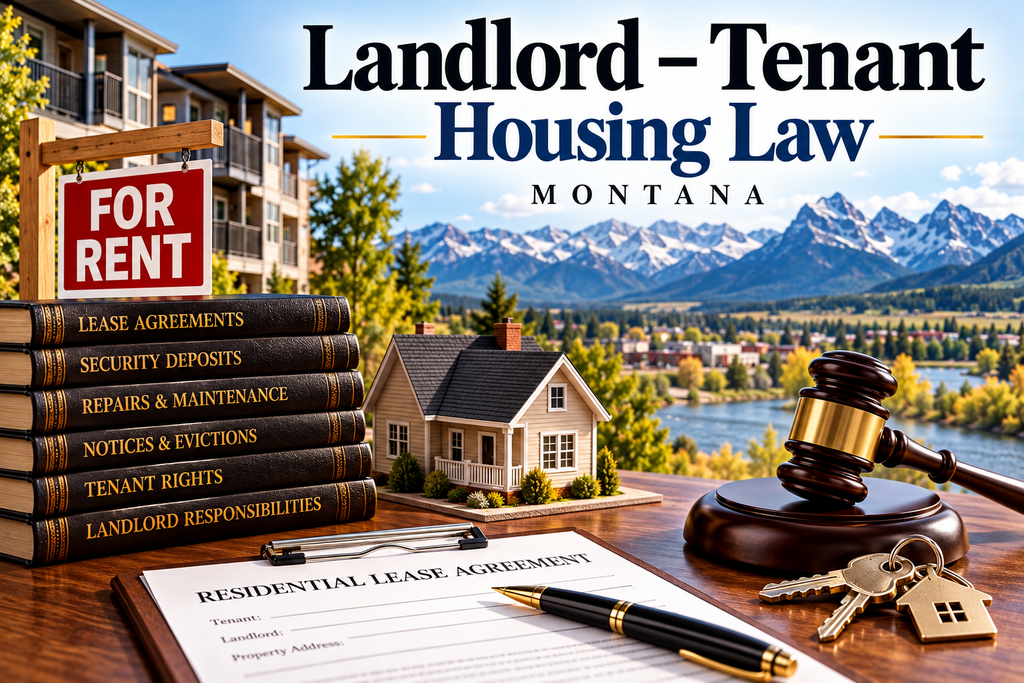
Landlord–tenant housing law governs the legal relationship between property owners and residential tenants, establishing rights and responsibilities for both sides throughout a rental arrangement. These laws can apply to issues involving leases, rent payments, security deposits, property conditions, repairs, utilities, landlord access, notices, and termination of a tenancy. A written rental agreement is an important starting point, but landlords and tenants may also have rights and obligations established by Montana law regardless of what a lease says.
Repairs, maintenance, and access to rental property are frequent sources of landlord–tenant disputes. Landlords generally have responsibilities concerning the condition and maintenance of residential rental property, while tenants also have obligations to properly use and care for the premises. Questions can also arise over when a landlord may enter a rental unit, how much notice may be required, and what circumstances—such as an emergency—may permit entry without the usual notice.
Security deposits, unpaid rent, lease violations, notices, and evictions are another major part of housing law. Montana law establishes procedures concerning security deposits and the termination of rental agreements, and landlords generally must follow the required legal process when seeking to evict a tenant. Likewise, tenants may have legal remedies when deposits are improperly withheld, necessary repairs are not addressed, utilities are wrongfully interrupted, or other landlord obligations are not fulfilled.
Landlord–tenant disputes can become complicated because the proper course of action often depends on the type of tenancy, terms of the lease, reason for the dispute, notices provided, and specific facts of the situation. Keeping copies of leases, notices, photographs, inspection reports, payment records, emails, text messages, and repair requests can be important when disagreements arise. KarlOnLaw.com provides general information to help Montana landlords and tenants better understand their rights, responsibilities, legal options, and the questions they should consider when dealing with rental housing issues.

Navigate divorce, child custody, parenting plans, support, and other Montana family law matters with clearer information about your rights and options.

Personal injury law involves situations where someone is injured because of another person's or company's negligence or wrongful conduct. These cases can arise from car and truck accidents, motorcycle crashes, pedestrian accidents, slip-and-fall incidents, dog bites, defective products, wrongful death, and other preventable injuries. A personal injury claim generally focuses on determining who was legally responsible for the injury and what compensation may be available for the resulting losses.
Car accidents are among the most common personal injury claims. After a serious collision, questions can arise about fault, insurance coverage, vehicle damage, medical treatment, lost income, and responsibility for future expenses. Evidence such as police reports, photographs, witness statements, medical records, vehicle damage, insurance information, and electronic or video evidence can become important when determining how an accident occurred and who may be responsible.
Compensation in a personal injury claim can depend on the circumstances and the extent of the person's damages. Potential damages may include medical expenses, rehabilitation costs, lost wages, reduced earning capacity, property damage, pain and suffering, and certain future losses. Montana's comparative-fault rules can also affect recovery when more than one person contributed to an accident, making the determination and allocation of fault particularly important.
Insurance companies often begin investigating an accident soon after it occurs, so preserving evidence and understanding your rights can be important before providing detailed statements or accepting a settlement. Personal injury cases also have legal filing deadlines, and those deadlines can vary depending on the type of claim and parties involved. KarlOnLaw.com provides general information to help Montanans understand personal injury and car accident claims, insurance issues, their legal options, and the questions they may want to ask before deciding what to do next.

Understand your rights, the criminal justice process, and the legal options available when facing DUI or criminal charges in Montana.
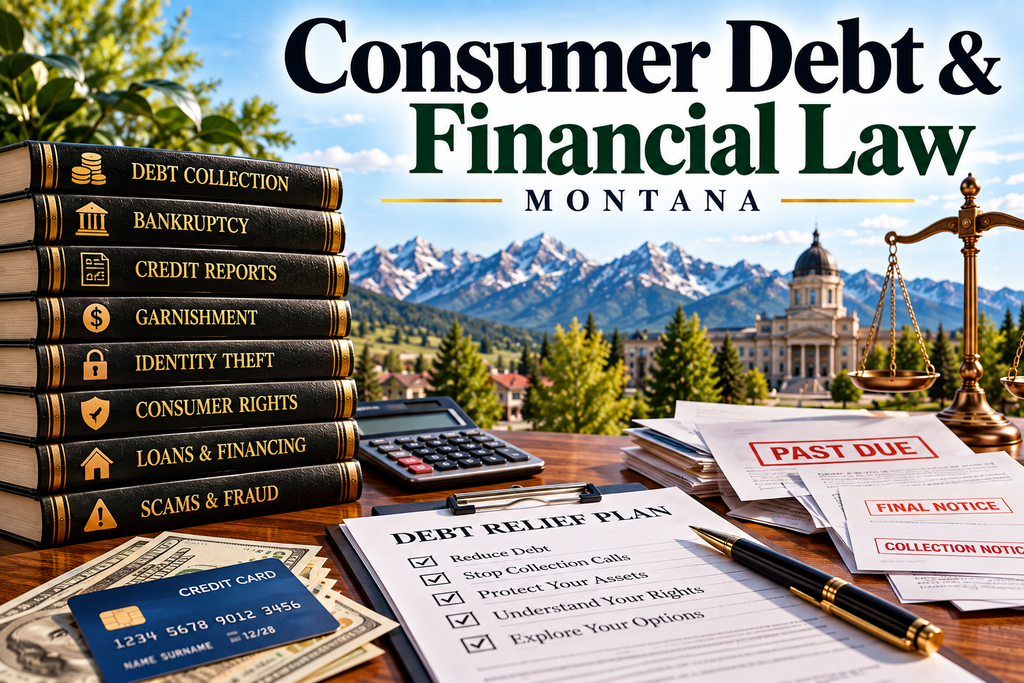
Consumer debt and financial law covers the legal rights and responsibilities that arise when individuals borrow money, use credit, fall behind on payments, or encounter problems with creditors and debt collectors.
These issues can involve credit cards, personal loans, medical bills, mortgages, vehicle loans, collection accounts, credit reports, judgments, and other financial obligations.
Understanding the applicable laws can help consumers determine what they owe, what a creditor may legally do to collect a debt, and what options may be available when financial difficulties arise.
Debt collection is an especially important part of consumer law. Federal and Montana laws can regulate how debts are collected, while federal law restricts certain abusive, deceptive, or unfair collection practices. A creditor or debt collector may sometimes file a lawsuit to collect an unpaid debt, and a judgment can potentially lead to additional collection procedures.
Consumers who receive collection letters, court papers, garnishment documents, or other notices should understand what the documents mean and whether a response or other action is required.
Consumer financial law also includes issues involving credit reports, identity theft, loans, financing, garnishment, scams, fraud, and consumer transactions. Errors on a credit report can affect a person's ability to obtain housing, financing, insurance, or other services, while identity theft can create debts the consumer never authorized. Consumer-protection laws may provide procedures for disputing inaccurate information, challenging certain collection practices, and addressing fraudulent or unauthorized financial activity.
When debt becomes difficult to manage, there may be several possible approaches depending on the circumstances, including negotiating with creditors, disputing questionable debts, establishing payment arrangements, responding to collection lawsuits, or considering bankruptcy when appropriate. Each option can have different legal and financial consequences, so understanding the situation before acting is important. KarlOnLaw.com provides general information to help Montanans better understand consumer debt and financial law, their legal rights and responsibilities, and the questions they may want to ask before deciding what to do next.
Straightforward Montana Legal information to help you understand your rights, explore your options, and move forward with confidence.