

Estate Planning & Wills
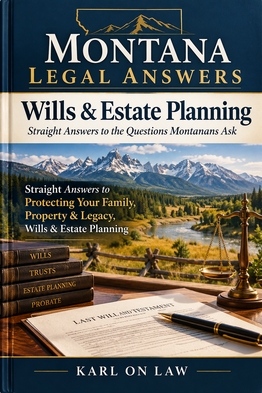
Estate planning is about more than deciding who receives your property after you're gone. A well-prepared estate plan can help protect your family, preserve the assets you've worked hard to build, and provide clear instructions about your wishes. Whether your estate is large or modest, having the right documents in place can give you greater control over important financial, personal, and family decisions.
A Last Will and Testament is one of the foundations of an estate plan. It allows you to identify beneficiaries, designate who should manage your estate, address the distribution of property, and make important provisions for minor children. Without a properly prepared will, Montana law may determine how certain assets are distributed, which may not reflect what you would have chosen for your family.
Estate planning can also involve much more than a will. Depending on your circumstances, an effective plan may include trusts, powers of attorney, beneficiary designations, health-care directives, property ownership planning, and strategies for transferring assets efficiently. Reviewing these pieces together can help identify potential problems before they become expensive or stressful issues for the people you care about.
Life changes—and your estate plan should be reviewed as your circumstances change. Marriage, divorce, children, grandchildren, buying or selling property, starting a business, retirement, or the death of a beneficiary can all be reasons to revisit your documents. KarlOnLaw.com provides straightforward information to help Montanans better understand estate planning and wills, the questions they should be asking, and when it may be appropriate to speak with an attorney about creating or updating an estate plan.

Family Law / Divorce
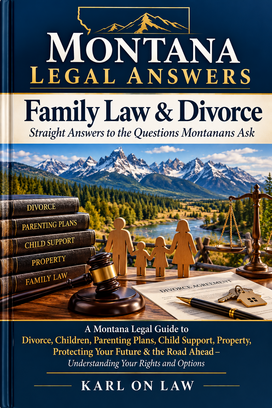
Family law matters can involve some of the most important and personal decisions you will ever face. Whether you are considering a divorce, dealing with parenting and custody issues, determining child support, or trying to understand your rights and responsibilities, having clear information can help you make informed decisions. Understanding the legal process before taking action can also help reduce uncertainty and prepare you for the decisions ahead.
Divorce involves much more than simply ending a marriage. Depending on the circumstances, issues may include division of property and debts, parenting plans, child support, spousal maintenance, retirement accounts, real estate, businesses, and other financial matters. Every family is different, which is why it is important to understand how Montana law may apply to your particular circumstances and what information and documentation may be important.
When children are involved, decisions concerning parenting arrangements, schedules, decision-making responsibilities, child support, relocation, and modifications of existing orders can have long-term consequences for the entire family. Family circumstances can also change over time, making it necessary to revisit an existing parenting plan or court order. Learning how these issues are addressed can help parents focus on practical solutions while protecting their rights and the interests of their children.
KarlOnLaw.com provides straightforward information to help Montanans better understand divorce, parenting plans, child support, property division, spousal maintenance, and other family-law matters. Whether you are just beginning to consider your options or already dealing with a family-law proceeding, becoming informed is an important first step. When your situation requires individualized legal advice, speaking directly with an experienced Montana attorney can help you understand your options and determine the appropriate path forward.

DUI / Criminal Defense Basics
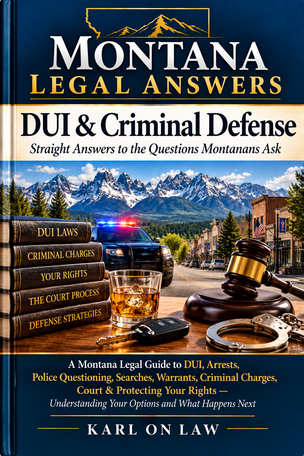
Being arrested or charged with a DUI or criminal offense can be overwhelming, especially if you have never been involved with the criminal justice system before. Questions about your driver's license, court appearances, possible penalties, employment, insurance, and your permanent record can arise quickly. Understanding the basic legal process and your rights can help you make informed decisions during a situation where timing and preparation may matter.
A DUI case can involve more than the criminal charge itself. Depending on the circumstances, there may be issues involving traffic stops, field sobriety testing, breath or blood testing, driver's-license consequences, court proceedings, and the evidence law enforcement intends to use. The facts of every case are different, and an arrest or citation does not eliminate a person's right to understand the allegations, review the evidence, and raise legally available defenses.
Criminal defense can cover a wide range of matters, from misdemeanors and traffic-related offenses to more serious criminal charges. Important questions may involve searches and seizures, statements made to law enforcement, warrants, probable cause, evidence, witnesses, constitutional rights, plea negotiations, and trial procedures. Learning how the criminal justice process works can help you understand what may happen next and what questions you should be asking before making important decisions about your case.
KarlOnLaw.com provides straightforward information to help Montanans better understand DUI charges, criminal investigations, arrests, court procedures, constitutional protections, and basic criminal-defense issues. If you or someone you care about is facing criminal allegations, becoming informed is an important first step—but general information is not a substitute for advice about a specific case. Speaking directly with an experienced Montana criminal-defense attorney can help you understand the allegations, available options, and potential consequences before deciding how to proceed.
Landlord-Tenant
Housing Laws
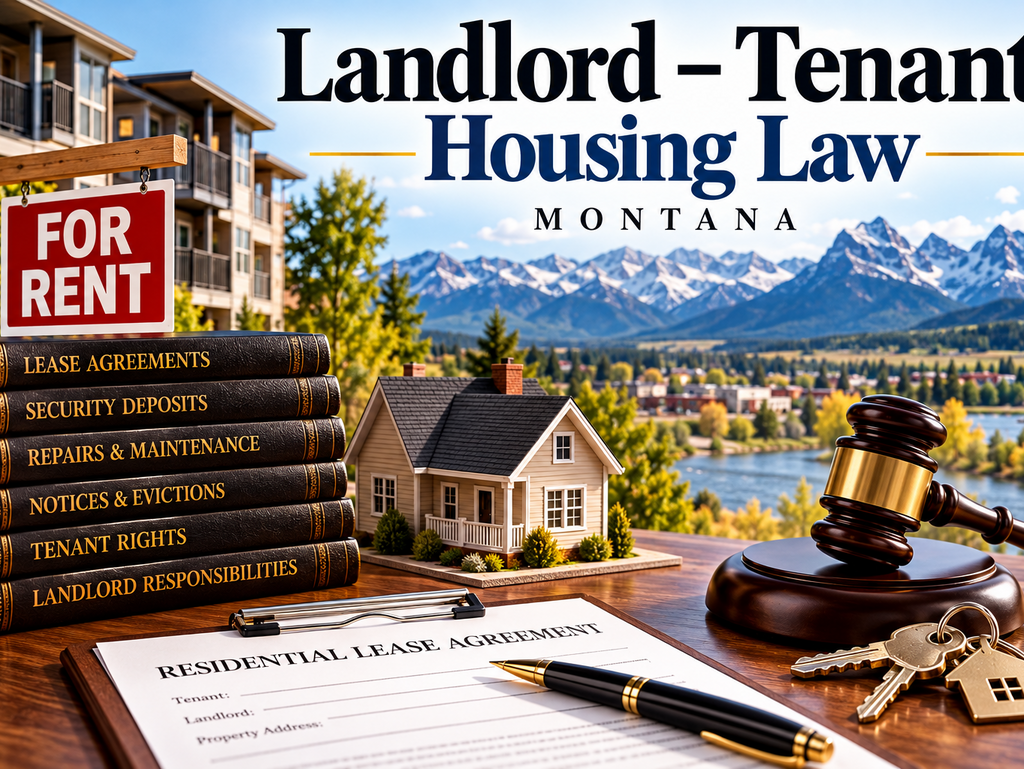
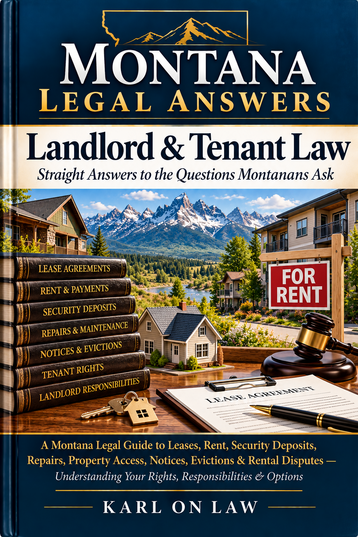
Whether you rent a home, own rental property, manage apartments, or operate residential housing in Montana, understanding landlord-tenant law can help prevent costly disputes and unexpected problems. Montana housing laws address many aspects of the rental relationship, including rental agreements, security deposits, rent, repairs, property access, habitability, notices, lease violations, and termination of tenancy. Knowing the basic rules—and understanding the responsibilities of both landlords and tenants—can make it easier to address problems before they turn into serious legal disputes.
This section of Montana Legal Answers explains common questions involving Montana residential landlord-tenant law in straightforward, practical language. Learn about written and oral rental agreements, security deposits and deductions, maintenance responsibilities, landlord access to rental property, utilities, damage to the premises, unauthorized occupants and pets, late or unpaid rent, lease violations, and other issues that commonly arise during a tenancy. It also explains important considerations when communicating with the other party, documenting problems, providing notices, and maintaining records that may become important if a disagreement develops.
When a tenancy begins to break down, understanding the proper legal process becomes especially important. This section discusses termination notices, nonpayment of rent, alleged lease violations, eviction proceedings, abandoned property, security-deposit disputes, habitability concerns, and landlord or tenant remedies. It also helps readers understand the difference between demanding that a problem be corrected and taking formal legal action, while emphasizing the importance of following Montana law rather than relying on assumptions, informal practices, or self-help remedies.
Whether you are a Montana landlord trying to protect your property and investment or a tenant trying to understand your housing rights, the goal is to help you make better-informed decisions about what to do next. Karl On Law — Montana Legal Answers provides an accessible starting point for understanding the rules, procedures, and terminology surrounding residential rental housing in Montana. With clearer information about your rights, responsibilities, options, and potential remedies, you can approach landlord-tenant issues with greater confidence and recognize when a situation may require advice from a qualified Montana attorney.

Personal Injury &
Automobile Accidents
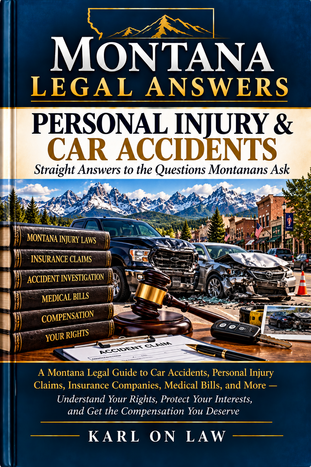
An unexpected car accident or personal injury can quickly create medical, financial, insurance, and legal questions that most people are not prepared to handle. In Montana, an injured person may need to understand issues involving fault, insurance coverage, medical expenses, lost wages, property damage, bodily injury claims, and compensation for injuries and other losses. Knowing what to do immediately after an accident—and what mistakes to avoid—can make an important difference when protecting your rights and documenting a potential claim.
This section of Montana Legal Answers explains common questions involving personal injury and automobile accidents in Montana in straightforward, practical language. Learn what steps to consider after a collision, when an accident should be reported, what information and photographs to collect, how medical treatment and records may affect a claim, and how insurance claims generally work. It also addresses subjects such as uninsured and underinsured motorists, passengers, pedestrians, motorcycles, commercial vehicles, insurance adjusters, recorded statements, settlement offers, and disputes over who was responsible for an accident.
When injuries are involved, determining the full impact of an accident may take time. This section discusses issues involving emergency treatment, ongoing medical care, rehabilitation, medical bills, lost income, reduced earning capacity, property damage, pain and suffering, permanent injuries, and other potentially recoverable losses, depending on the facts and applicable law. Readers can also learn about communicating with insurance companies, preserving evidence, documenting expenses and symptoms, evaluating settlement considerations, and understanding why applicable deadlines and statutes of limitation can be important.
Whether you were injured in an automobile accident, are dealing with an insurance company, or simply want to understand your rights before accepting a settlement, the goal is to help you make better-informed decisions about what happens next. Karl On Law — Montana Legal Answers provides an accessible starting point for understanding Montana personal injury and automobile accident claims, from the moments immediately following a collision through the insurance and potential legal process. With clearer information about your rights, responsibilities, options, insurance coverage, and potential compensation, you can better protect your interests and recognize when your situation may require advice from a qualified Montana attorney.
facer

Consumer Debt &
Financial Laws
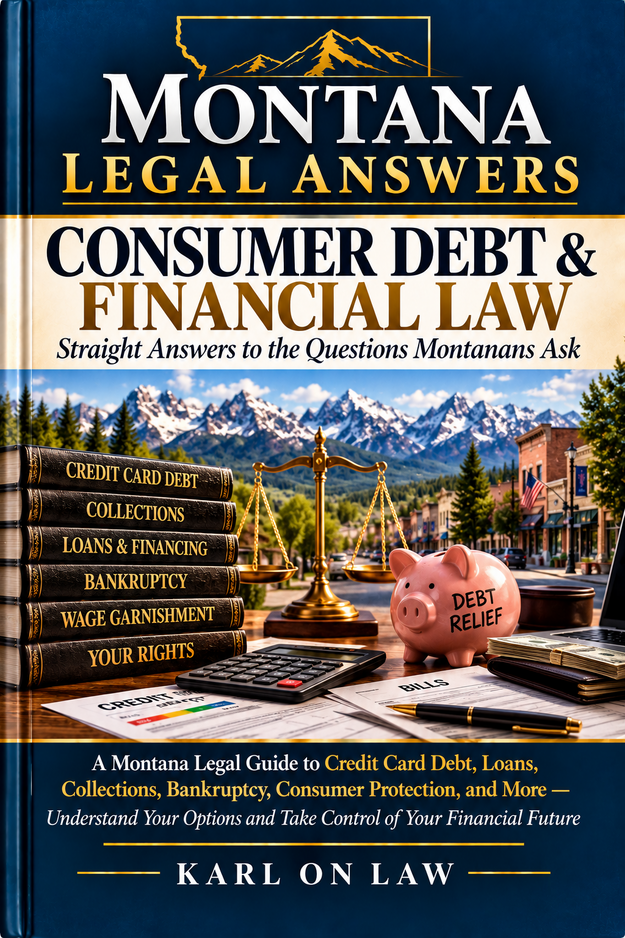
Financial problems can develop quickly when credit card balances, medical bills, personal loans, auto loans, collection accounts, or other debts become difficult to manage. Montana consumers may face questions about creditors, debt collectors, collection lawsuits, wage garnishment, bank accounts, credit reporting, repossession, bankruptcy, and consumer protections. Understanding your legal rights and financial options can help you respond appropriately, avoid costly mistakes, and make informed decisions before a manageable financial problem becomes a larger legal issue.
This section of Montana Legal Answers explains common consumer debt and financial law issues in Montana in straightforward, practical language. Learn about credit card debt, medical debt, personal and automobile loans, debt collection practices, collection notices, credit reports, disputed debts, judgments, liens, garnishments, repossessions, and creditor lawsuits. It also discusses important consumer protections and the steps consumers can consider when they believe a debt is inaccurate, a collector is demanding money they do not owe, or collection activity may violate applicable state or federal law.
When debts become overwhelming, understanding the available options becomes especially important. This section explores topics such as negotiating with creditors, payment arrangements, debt settlements, responding to collection lawsuits, protecting certain income and property, wage and bank-account garnishment, foreclosure and repossession concerns, and bankruptcy basics. Readers can also learn why documentation, written communications, court deadlines, statutes of limitation, and careful review of settlement or repayment agreements can matter when dealing with creditors, collection agencies, lenders, and other financial institutions.
Whether you are trying to regain control of your finances, responding to a debt collector, facing a collection lawsuit, or simply trying to understand your consumer rights, the goal is to help you make better-informed decisions about what comes next. Karl On Law — Montana Legal Answers provides an accessible starting point for understanding Montana consumer debt and financial laws while also explaining important federal consumer protections that may apply. With clearer information about your rights, obligations, available options, and potential remedies, you can better protect your financial interests and recognize when your situation may require advice from a qualified Montana attorney.

Straightforward Montana Legal information to help you understand your rights, explore your options, and move forward with confidence.